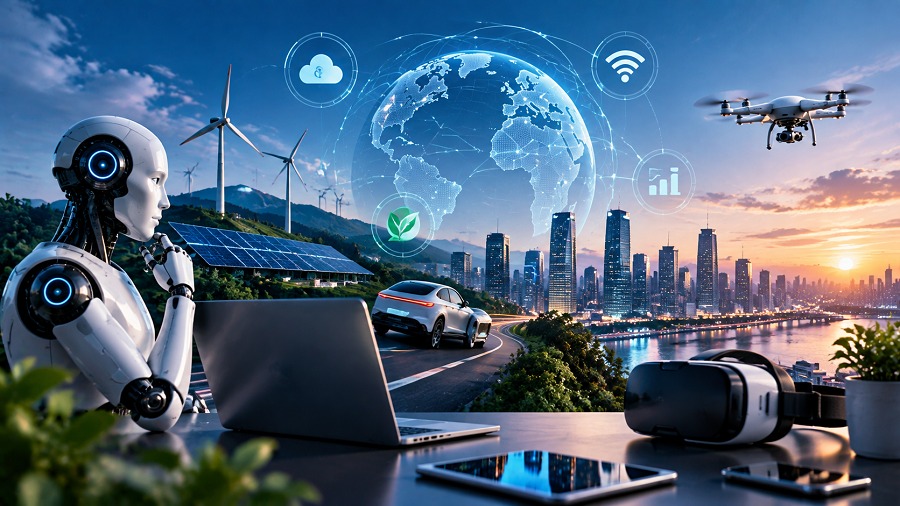

Technology continues to transform the way people live, work, communicate, and solve problems. Every year brings new innovations that influence businesses, consumers, education, healthcare, and entertainment. Understanding the latest technology trends helps individuals and organizations prepare for a rapidly changing digital environment.
From artificial intelligence and automation to cybersecurity, cloud computing, smart devices, and sustainable technology, modern innovations are becoming more connected and intelligent. These developments are not only changing industries but also creating new opportunities for people around the world. For Indian consumers and businesses, technology trends are especially important. The growth of digital payments, smartphones, online services, startups, and internet-based businesses has made technology a central part of everyday life. This article explores the most important technology trends shaping the future, their benefits, challenges, and practical impact on users.
Why Technology Trends Matter
Technology trends represent the direction in which innovation is moving. They help businesses, professionals, students, and consumers understand which technologies are becoming important and how they may affect the future.
Following technology trends helps people:
- Make better technology decisions.
- Learn valuable digital skills.
- Improve productivity
- Protect personal information
- Identify business opportunities
For companies, understanding technology trends can improve competitiveness by enabling them to adopt useful tools before competitors do.
However, not every new technology becomes successful. Some innovations receive attention but fail to achieve widespread adoption. Therefore, users should evaluate technology based on practical value rather than hype.
Artificial Intelligence Is the Biggest Technology Trend
Artificial intelligence (AI) remains one of the most influential technology trends worldwide.
AI systems are becoming more capable of understanding information, generating content, analyzing data, and assisting humans in daily tasks.
Modern AI applications include:
- Generative AI tools
- AI-powered search
- Virtual assistants
- Automated customer support
- Software development assistance
- Business analytics
AI is moving from experimental technology into everyday applications.
Generative AI and Intelligent Applications
Generative AI has changed how people interact with technology.
Unlike traditional software that follows fixed instructions, generative AI can create new content based on user requests.
Examples include:
- Writing assistance
- Image generation
- Video creation
- Code suggestions
- Research support
Businesses are exploring generative AI to improve productivity, automate repetitive tasks, and enhance customer experiences.
Benefits of AI Technology
AI provides several advantages:
Increased Productivity
AI tools can help users complete tasks faster by automating repetitive activities.
Examples:
- Summarizing documents
- Creating drafts
- Analyzing information
- Generating ideas
Better Decision Making
AI can process large amounts of data and identify patterns that may be difficult for humans to detect.
Businesses use AI analytics for:
- Customer insights
- Market analysis
- Forecasting
Challenges of Artificial Intelligence
Despite its benefits, AI also creates challenges.
Important concerns include:
- Data privacy
- Incorrect information generation
- Security risks
- Employment changes
- Ethical concerns
Users should treat AI-generated information carefully and verify important decisions.
Cloud Computing Continues to Grow
Cloud computing remains a major technology trend because businesses increasingly depend on online infrastructure.
Cloud platforms allow organizations to store data, run applications, and manage services without maintaining large physical servers.
Common cloud services include:
- Data storage
- Software hosting
- Business applications
- Backup systems
- Remote collaboration tools
Why Cloud Technology Matters for Businesses
Cloud computing provides several advantages:
Scalability
Businesses can increase or reduce computing resources based on demand.
For example, an e-commerce website can handle increased traffic during major sales events by using flexible cloud resources.
Cost Efficiency
Companies can reduce investment in physical infrastructure by using cloud services.
Remote Accessibility
Employees can access business tools and information from different locations.
This has become especially important with remote and hybrid work models.
Cybersecurity Becomes a Critical Technology Priority
As more services move online, cybersecurity has become one of the most important technology trends.
Individuals and organizations face risks such as:
- Phishing attacks
- Malware
- Data breaches
- Identity theft
- Online fraud
Protecting digital information has become essential.
Emerging Cybersecurity Trends
AI-Powered Security
Security companies are increasingly using artificial intelligence to identify unusual activity and detect threats faster.
AI can help with:
- Threat detection
- Automated monitoring
- Security analysis
However, attackers can also use AI, creating an ongoing technological challenge.
Passwordless Authentication
Many companies are moving toward alternatives to traditional passwords.
Examples include:
- Passkeys
- Biometrics
- Multi-factor authentication
These methods can improve account security and reduce password-related risks.
Smart Devices and Internet of Things (IoT)
The Internet of Things connects physical devices to the internet, allowing them to collect and exchange information.
Examples include:
- Smart watches
- Smart home systems
- Connected vehicles
- Industrial sensors
- Smart security cameras
IoT technology is becoming increasingly common in homes and businesses.
How IoT Is Changing Everyday Life
Smart devices can improve:
Convenience
Users can control devices remotely through smartphones or voice assistants.
Energy Efficiency
Smart systems can optimize electricity usage.
Examples:
- Smart lighting
- Intelligent temperature control
Business Operations
Industries use IoT sensors for:
- Equipment monitoring
- Supply chain management
- Predictive maintenance
5G and Advanced Connectivity
Faster connectivity is another important technology trend.
5G networks are expanding digital possibilities by improving:
- Internet speed
- Network reliability
- Response time
Impact of 5G Technology
5G can support:
- Better mobile experiences
- Cloud gaming
- Smart cities
- Connected vehicles
- Industrial automation
For India, improved connectivity supports digital services, online education, remote work, and business growth.
Automation and Robotics
Automation is changing industries by allowing machines and software systems to perform repetitive tasks.
Businesses use automation for:
- Manufacturing
- Customer service
- Data processing
- Logistics
Rise of AI-Powered Automation
Modern automation combines artificial intelligence with traditional software.
Examples include:
- Automated customer assistants
- Smart inventory systems
- Workflow automation tools
The goal is not only to replace manual work but also to improve efficiency and accuracy.
Low-Code and No-Code Development
Low-code and no-code platforms are becoming popular because businesses need applications faster.
These platforms allow users to create software using visual interfaces instead of writing every line of code manually.
Advantages of Low-Code Technology
Benefits include:
- Faster development
- Lower development costs
- Easier business automation
- Faster testing
Limitations of Low-Code Platforms
However, they may not be suitable for:
- Highly complex systems
- Large-scale enterprise applications
- Highly customized software requirements
Traditional programming remains important for advanced projects.
Sustainable Technology and Green Innovation
Environmental concerns are influencing technology development.
Companies are focusing on:
- Energy-efficient devices
- Renewable energy technology
- Electric vehicles
- Sustainable manufacturing
Technology is increasingly being designed with environmental responsibility in mind.
Electric Vehicles and Smart Transportation
Electric vehicles (EVs) are becoming an important technology trend.
EV technology continues improving through:
- Better batteries
- Faster charging
- Improved efficiency
Smart transportation systems also use technology to improve:
- Traffic management
- Public transport
- Vehicle safety
Future Technology Trends to Watch
Technology development will continue accelerating.
Some important future areas include:
Quantum Computing
Quantum computing uses advanced principles of physics to solve certain types of problems.
Potential applications include:
- Scientific research
- Drug discovery
- Cryptography
However, practical large-scale adoption is still developing.
Extended Reality (AR and VR)
Augmented reality and virtual reality technologies may expand in:
- Education
- Training
- Gaming
- Professional applications
Advanced Robotics
Robotics is expected to grow in:
- Healthcare
- Manufacturing
- Logistics
- Research
Technology Trends for Indian Businesses
Indian businesses can benefit significantly from adopting modern technologies.
Important areas include:
Digital Transformation
Companies are moving from manual processes to digital systems.
Examples:
- Online customer management
- Cloud-based accounting
- Digital communication tools
Artificial Intelligence Adoption
Businesses can use AI for:
- Customer support
- Marketing analysis
- Automation
- Data insights
Cybersecurity Investment
As businesses collect more digital information, protecting customer and company data becomes increasingly important.
How Consumers Can Follow Technology Trends
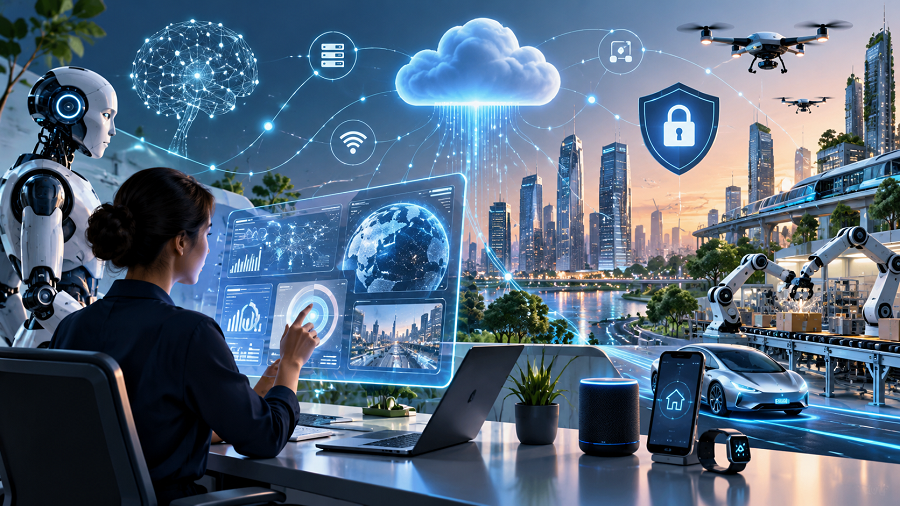
With thousands of technology updates published every day, users should focus on reliable information.
Good practices include:
Check Multiple Sources
Compare information before making important decisions.
Focus on Practical Benefits
Ask:
- Does this technology solve a real problem?
- Is it affordable?
- Is it secure?
- Will it provide long-term value?
Avoid Technology Hype
Some technologies become popular because of marketing rather than real-world usefulness.
Critical evaluation helps users choose better solutions.
Frequently Asked Questions (FAQs)
What are the biggest technology trends in 2026?
Major technology trends include artificial intelligence, cloud computing, cybersecurity, automation, smart devices, 5G, and sustainable technology.
Why are technology trends important?
Technology trends help people understand future developments, learn new skills, improve productivity, and make better technology decisions.
How is AI affecting technology trends?
AI is influencing software, smartphones, business automation, cybersecurity, and content creation by making digital systems more intelligent.
Are all new technology trends worth adopting?
No. Businesses and consumers should evaluate cost, security, usefulness, and long-term benefits before adopting new technologies.
What technology trends are important for Indian businesses?
Indian businesses can benefit from AI, cloud computing, automation, cybersecurity, digital payments, and online business platforms.
How can people learn about new technology trends?
People can follow trusted technology publications, industry reports, expert analysis, and educational resources to understand new developments.
Conclusion
The future of technology will be shaped by innovation, automation, artificial intelligence, connectivity, and digital transformation. The latest technology trends are changing how people work, communicate, and solve problems.
For Indian users and businesses, understanding these developments is becoming increasingly important. Technologies such as AI, cloud computing, cybersecurity, and smart devices offer significant opportunities but also require careful evaluation.
The most successful technology adoption comes from understanding both the benefits and limitations of new innovations. By staying informed about technology trends, individuals and organizations can make smarter decisions and prepare for the digital future.